
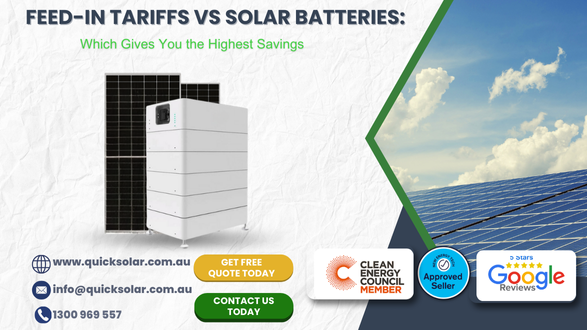
In Australia, solar energy has become a significant solution for households looking to reduce electricity costs, and two popular options to maximise savings are Feed-in Tariffs (FIT) and solar batteries. But which one offers the best value in 2025–26?
Both options have their benefits and can contribute to lowering your electricity bill. However, it’s essential to understand the difference between solar battery vs feed-in tariff savings and how each can affect your home’s energy use.
This blog compares the two, discusses how solar batteries work, and examines the pros and cons of each option. We’ll also provide a state-by-state comparison to help you make the most informed decision for your energy needs.
What Are Feed-in Tariffs (FIT)?
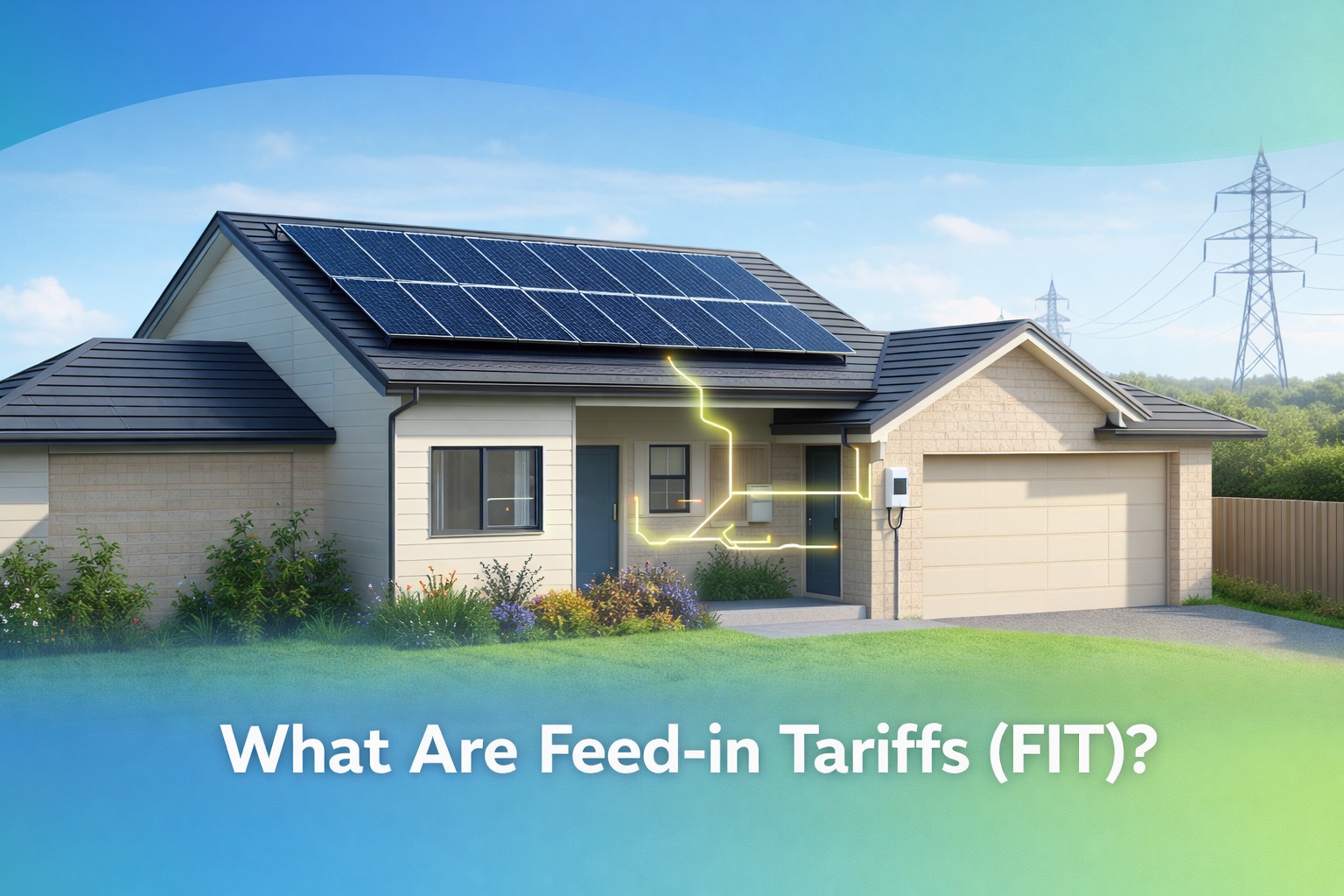
Feed-in Tariffs (FIT) are payments made by energy retailers to households or businesses that generate their own electricity using solar power and send any excess energy back to the grid. The idea is that you are rewarded for contributing to the national grid, which helps balance the supply of energy.
How Do FIT Work?
- Generate Solar Power: You use solar panels to generate electricity.
- Excess Energy is Sent to the Grid: Any electricity you don’t use is fed into the grid.
- Earn Payments: Energy companies pay you for the excess energy you provide. The rates vary by state and retailer.
In Brisbane, solar feed-in tariffs are regulated by the state, and you can earn a fixed rate for your excess energy. However, it’s important to note that feed-in tariff rates have dropped in recent years, and they may continue to decrease.
How Do Solar Batteries Work for Savings?
Solar batteries are another popular choice for solar-powered homes. They allow you to store excess solar energy generated during the day and use it at night or during periods of high demand when electricity rates are higher.
How Solar Batteries Save Money
- Store Excess Solar Energy: When your solar panels generate more electricity than you need, the surplus is stored in the battery.
- Use Stored Energy During Peak Hours: Instead of sending that surplus back to the grid, you store it for later use, particularly during evening or cloudy hours when your solar panels aren’t generating energy.
- Reduce Grid Reliance: By using stored energy, you reduce the amount of electricity you need to purchase from the grid.
Solar batteries are a more self-sufficient option compared to FIT, as you’re relying less on external energy providers. Over time, this can significantly reduce your electricity bill and offer long-term savings
Pros & Cons of FIT vs Batteries

Feed-in Tariffs (FIT)
Pros:
- Easy to Understand: A straightforward system where you are paid for excess energy sent to the grid.
- Low Initial Investment: No need to invest in additional equipment (such as batteries).
- Passive Income: Once your solar panels are installed, there’s little effort needed to start earning from FIT.
Cons:
- Lower Payment Rates: Over time, FIT rates have been decreasing, and in some regions, they are now quite low, making it less profitable.
- Limited Control: You’re selling your excess energy at a low rate, instead of using it to power your home.
Solar Batteries
Pros:
- Control Over Your Energy: You store the excess energy for your own use, reducing your reliance on the grid.
- Higher Savings: By using stored energy during peak hours, you can save more money than just selling it back to the grid.
- Independence from Grid: Solar batteries provide more independence from the utility company, as you’re less reliant on grid power.
Cons:
- High Initial Cost: Batteries are a significant upfront investment.
- Maintenance Required: Solar batteries need to be maintained and may have a limited lifespan, which could incur additional costs over time.
- Capacity Limits: The amount of energy you can store depends on the battery’s capacity, which may not cover all your energy needs.
State-by-State Comparison: FIT vs Batteries (QLD, NSW, VIC)
Each state in Australia has different feed-in tariff rates and policies regarding solar batteries. Let’s look at how FIT vs solar battery savings compare across Queensland (QLD), New South Wales (NSW), and Victoria (VIC).
Queensland (QLD)
- Feed-in Tariff: In Queensland, the feed-in tariff ranges from 6.5¢ to 12¢ per kWh, depending on the retailer.
- Battery Options: With increasing solar uptake, solar batteries are becoming a popular choice. Battery storage allows Queenslanders to avoid relying on the grid, especially during peak hours. A solar battery vs feed in tariff comparison often shows that batteries give better long-term savings, especially for homes using a lot of energy in the evening.
New South Wales (NSW)
- Feed-in Tariff: The FIT in NSW ranges from 6¢ to 20¢ per kWh. However, as in other states, these rates are declining, meaning solar batteries are becoming a more attractive option.
- Battery Options: With high peak rates in NSW, using a solar battery to store excess energy during the day and use it during peak hours can provide significant savings, especially in cities like Sydney.
Victoria (VIC)
- Feed-in Tariff: Victoria offers 9¢ to 12¢ per kWh, which is slightly higher than the rates in Queensland.
- Battery Options: In Victoria, solar battery savings are also proving beneficial, particularly for households using a lot of energy in the evenings. With solar batteries, residents can store energy at a lower cost and use it at peak times.
Find the Best Option for Your Home
When it comes to feed in tariff vs battery savings, the right choice depends on your specific situation. While solar feed-in tariffs offer easy-to-understand, passive savings, solar batteries provide greater control and more significant long-term savings.
If you’re considering upgrading your solar system, it might be time to weigh the benefits of investing in a solar battery that suits your needs.
Quick Solar is one of the leading solar energy solution providers in Brisbane and across Queensland.
With years of experience in the industry, Quick Solar offers tailored advice, high-quality solar panel systems, and reliable energy-saving solutions.
Whether you’re looking to install solar panels, explore battery storage options, or understand how Feed-in Tariffs (FIT) work, Quick Solar ensures that homeowners receive the best possible advice and products for their energy needs. Their commitment to quality and customer satisfaction has made them a trusted name in solar energy for Brisbane residents.
For Brisbane residents and homeowners across Queensland, NSW, and Victoria, Quick Solar helps provide more tailored advice and solutions for your energy-saving needs. Take a step toward long-term savings and make the most of your solar investment.
Contact Quick Solar to get personalized advice and start saving on your energy bills now!