

Installing a solar battery is one of the most effective ways Brisbane homeowners can get more value from rooftop solar.
A well-sized battery stores surplus solar energy produced during the day so you can use it in the evening, reduce grid use and lower bills. However, choosing the right size isn’t straightforward — it depends on your everyday energy use, household size, solar system output, and future plans.
This solar battery sizing guide Australia helps you make an informed decision. You’ll learn why size matters, how to work out typical usage, steps to match a battery to your daily needs, and real examples to show how the process works.
Why Battery Size Matters
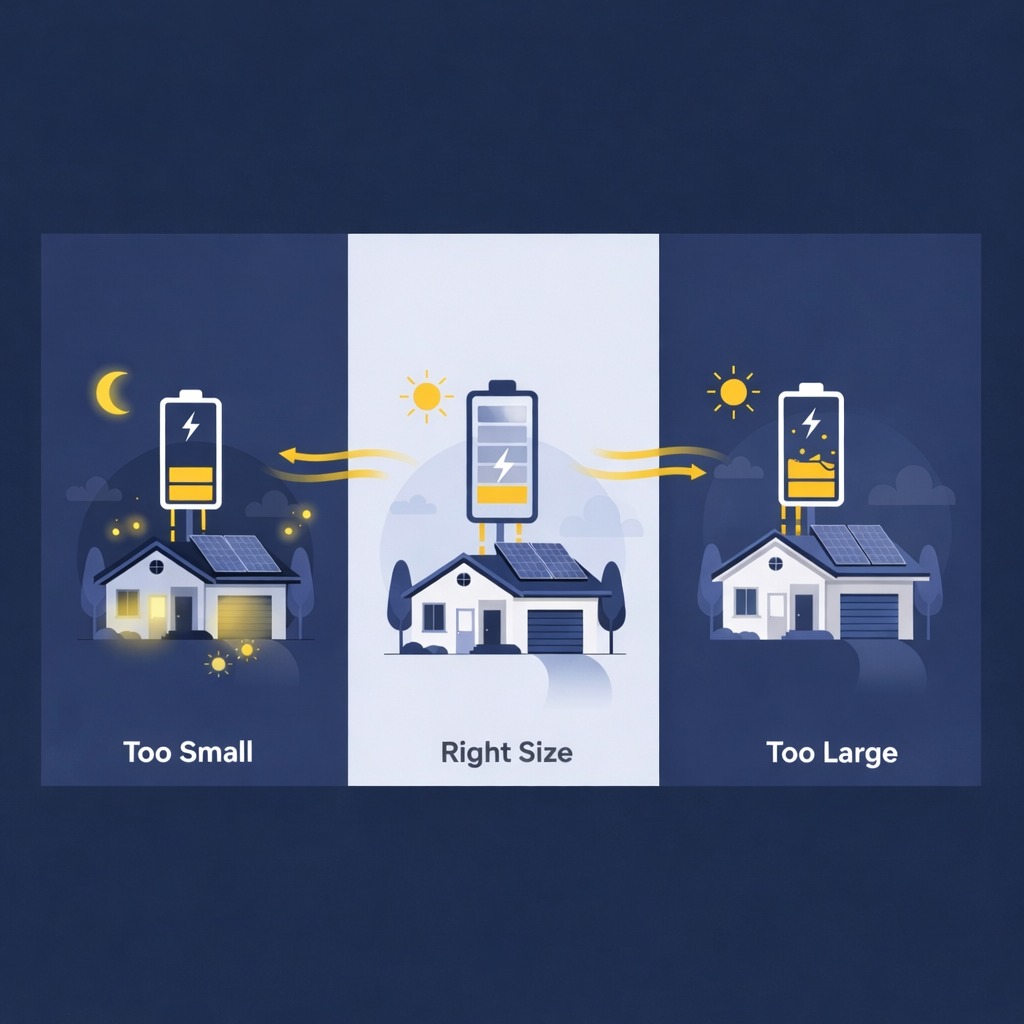
Simply put, the size of your solar battery determines how much energy you can store and use when the sun isn’t shining.
A battery that is too small will fill quickly with surplus solar energy and leave you drawing from the grid more often. Conversely, a battery that is much larger than your needs increases upfront cost without delivering additional savings.
The key is to match the battery to your usage so that most of what you pay goes toward usable storage rather than excess capacity that rarely gets used.
Getting the size right also ensures you maximise the value of any government incentives.
Under the Cheaper Home Batteries Program, eligible battery systems between 5 kWh and 100 kWh can receive a discount on upfront cost through small-scale technology certificates, making the investment more affordable.
Typical Household Usage Profiles in Brisbane
Before you can decide what size battery you need, it helps to know how much electricity your household uses each day. Most Brisbane homes use between 11 kWh and 23 kWh per day based on typical Australian household data, but this varies depending on lifestyle, appliances, air-conditioning use and family size. Here’s a quick breakdown:
Small Household
- 1–2 people
- Daily usage: ~10–15 kWh
- Low overnight load
- Ideal battery range: 5–7 kWh
Medium Household
- 3–4 people
- Daily usage: ~16–25 kWh
- Evening energy use is moderate
- Ideal battery range: 10–13 kWh
Large Household
- 5+ people, pool, EV charger or high air-conditioning use
- Daily usage: 25 kWh+
- Higher night-time load
- Ideal battery range: 13–20 kWh or more
Solar Panel Size and Typical Battery Pairing
Your solar battery size should always be considered alongside your solar panel system size.
Solar panels generate the electricity that charges your battery — if you don’t have enough panels to produce surplus power, a large battery won’t be filled regularly.
For this reason, battery capacity should be matched to both your solar system output and your household energy use. If you are still exploring battery options, you can learn more about available systems on the Quick Solar solar battery solutions: Learn more
Here’s a general guide to pairing common solar panel systems with battery sizes:
6.6 kW solar system
- Typical daily output: ~25–30 kWh
- Recommended battery: 5–7 kWh
8 kW solar system
- Daily output: ~30–35 kWh
- Recommended battery: 7–10 kWh
10 kW solar system
- Daily output: ~35–45 kWh
- Recommended battery: 10–15 kWh
These pairings aim to store most of your solar surplus without oversizing relative to what your solar panels can produce.
Step-by-Step Solar Battery Sizing Guide Australia
Here’s a methodical way to choose solar battery size that aligns with your usage and goals:
Step 1: Calculate Your Daily Usage
Check your latest electricity bills for your average daily usage in kilowatt-hours (kWh). If you have a smart meter, ask your provider for 12 months of interval data — this gives the most accurate picture of when and how you use energy.
Step 2: Estimate Night-Time Usage
Most solar systems make excess power during daylight, but batteries are used mainly at night. Look at how much electricity you consume after sunset. For many homes, this is 60–70 per cent of total daily usage.
Step 3: Review Solar Generation
Match your solar production with your usage. If your system regularly produces a surplus that would otherwise be exported to the grid, that is the energy available for storing in a battery.
Step 4: Account for Future Changes
Think about future changes like adding an EV charger, upgrading appliances, or planning for longer periods at home. These will increase daily usage and may justify a larger battery.
Step 5: Choose Your Battery Capacity
Choose a capacity that covers most of your nightly needs without overspending on extra capacity you won’t use. In simple terms, your battery’s usable capacity should match your night-time load.
Remember that for government rebate eligibility, systems must typically be between 5 kWh and 100 kWh capacity and installed with accredited installers.
Example Scenarios

To make this practical, here are examples based on typical Brisbane homes:
Scenario 1: Small Family Home
- Residents: 2 adults, 1 child
- Daily usage: 14 kWh
- Night usage: 8 kWh
- Recommended battery: 6–7 kWh
Covers evening power use and reduces grid reliance.
Scenario 2: Medium Brisbane Family
- Residents: 2 adults, 2 kids
- Daily usage: 22 kWh
- Night usage: 14 kWh
- Recommended battery: 10–12 kWh
Balances storage with cost and smooths overnight demand.
Scenario 3: Large Home With Pool
- Residents: 5+
- Daily usage: 35 kWh
- Night usage: 20 kWh
- Recommended battery: 14–16 kWh
Supports larger loads and appliances.
Scenario 4: EV Charging Household
- Daily usage plus EV charging: 30–40 kWh
- Night usage: 20–25 kWh
- Recommended battery: 15 kWh or more
Better supports EV charging and night-time loads.
Local Considerations for Brisbane
Queensland enjoys high solar generation compared to southern states, meaning Brisbane homes often make plenty of surplus solar energy.
This can influence battery size decisions, making moderately sized batteries more effective at storing excess power during the day and reducing grid use at night.
It’s also important to consider seasonal variation — solar production is higher in summer but still valuable in winter months. Using interval data from your provider helps you assess these patterns throughout the year.
Local installers such as Quick Solar factor in these Brisbane-specific conditions when designing battery systems. By assessing real usage data, roof orientation, and seasonal patterns, they help homeowners select a battery size that delivers practical savings and long-term value.
Common Mistakes to Avoid

Many homeowners make the same errors when selecting a battery:
- Sizing only by panel size: Panels and usage both matter.
- Ignoring night-time consumption: Batteries are most valuable after sunset.
- Choosing oversized batteries without need: More capacity increases upfront cost and payback period.
- Not accounting for future needs: EV chargers, home renovations and lifestyle changes increase usage.
Proper sizing avoids these pitfalls and ensures you get real value from your battery investment.
Choosing the right battery size can significantly reduce your electricity bills and improve energy independence.
For a tailored recommendation based on your actual usage and rooftop solar capacity, speak to an accredited solar installer in Brisbane who can review your needs and explain your options clearly.
Start with an energy usage analysis and explore battery options that match your home and lifestyle.